Is there a limitation for UV gadgets when it comes to killing viruses?
June 11, 2022 · 12 min read
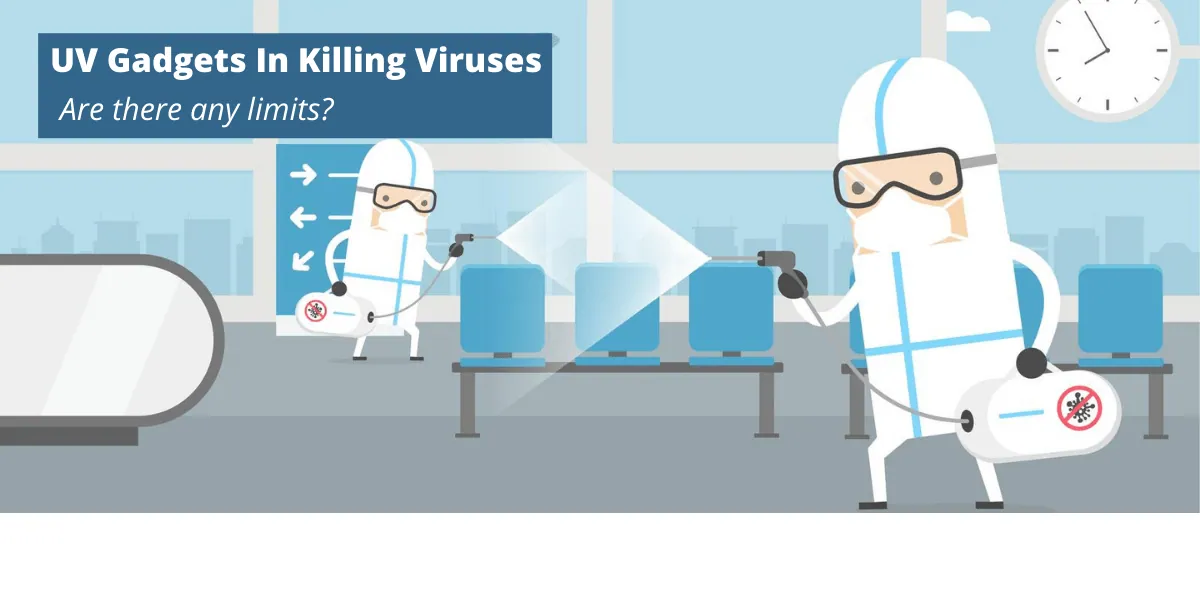
Limitations for UV gadgets killing viruses
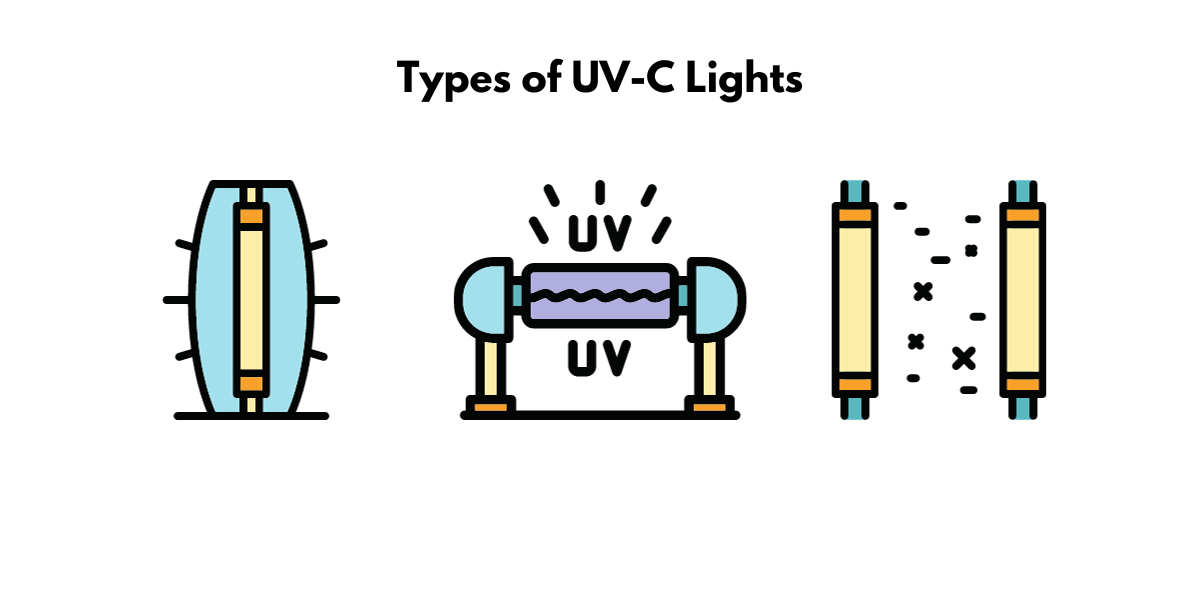
Ultraviolet (UV) light is a type of electromagnetic radiation with a shorter wavelength than visible light. It is now an important tool in the fight against COVID-19. Scientists have known about the disinfection capabilities of UV light for decades, and it has been used in a variety of settings, such as hospitals and schools. Yet, some questions remain unanswered about the efficacy of UV-C gadgets when it comes to killing viruses. A study led by a scientist from Columbia University found that UV-C is effective against SARS-CoV-2, the virus that causes COVID-19. Ultraviolet-C (UV-C) is a type of ultraviolet radiation. It falls in the wavelength range from 200 to 280 nanometers. UV-C is effective at killing viruses, bacteria, and other microorganisms. It works by disrupting the DNA or RNA of the cells, rendering them unable to reproduce or cause infection. UV-C is considered safe for humans and animals when used properly. Germicidal UV products have become a popular choice for many businesses and organizations because of their effectiveness in killing viruses. They are commonly used in hospitals, medical labs, senior care centers, fire and police stations, airports, transit stations, schools, government buildings, office buildings, and hotels. In addition, UV-C products tout pathogen kill rates higher than 99.9%, making them an incredibly useful tool against the spread of harmful viruses.
What is UV-C light?
UV-C is a type of ultraviolet light used to disinfect and kill pathogens like bacteria and viruses. It falls in the wavelength range of 200 to 280 nanometers, making it effective at killing these organisms. UV-C is commonly used in various settings, including hospitals, schools, food processing plants, and more. There is a lot of confusion about the effectiveness of UV light against viruses. The IES recently released a report that stated germicidal UV-C is the most effective part of the spectrum for killing viruses. However, UV-A and UV-B light can also kill some bacteria and germs but are mostly ineffective against viruses like SARS-CoV-2. In essence, UV-C light is a type of radiation that is not visible to the human eye. Scientists usually refer to it as radiant energy. UV products that use this wavelength are not visible to users, so it is often called "UV light." Ultraviolet wavelengths fall just outside the visible light spectrum and have different properties than visible light.What is far-UVC light?
Far-UVC light is a type of ultraviolet radiation used in products like germicidal lamps. It has a wavelength between 207 and 222 nm, and scientists have been focusing on it more in the last decade because of its potential benefits. One study, in particular, has focused on the use of far-UVC light as a potential disinfectant. Far-UVC is believed to be just as effective at killing germs as higher ranges of UV-C light but less harmful to our skin and eyes. This could make it a more practical choice for disinfection in public areas and healthcare settings. The IES warns that safety may depend on the product's glass envelope or the outer layer of the lamp. In other words, if a UV-C light product doesn't have a strong glass casing, it could be dangerous to use. The study concluded that 222 nm UV could inactivate pathogens but not penetrate the skin. This wavelength is beneficial for disinfecting surfaces and objects, but it's not as harmful to humans. Scientists are still studying Far-UVC light, but some manufacturers are already starting to use the technology in their products. In addition, some studies suggest that wavelengths as low as 185 nm can still kill germs, so there is potential for far-UVC to become a common way of disinfecting surfaces.How does germicidal UV kill viruses?
UV-C products use short-wavelength ultraviolet radiation to kill pathogens. This radiation penetrates the cell walls of microorganisms and damages their DNA and RNA, preventing them from reproducing. As a result, most UV-C products can inactivate up to 99.9% of viruses, bacteria, mold spores, and fungus. In particular, UV gadgets emit a ray of UV-C light. This light can penetrate the cell wall and DNA of the virus, breaking it down and inactivating it. As a result, germicidal UV is an extremely effective way to kill viruses and stop them from spreading. Germicidal UV is a type of radiation that has been around for many years. The CDC and FEMA endorsed it for use in hospitals in the early 2000s. However, it hasn't been widely used in the U.S. until recently. This may be due to concerns about its efficacy or lack of knowledge about it. But, as more studies are conducted, and people become more aware of its benefits, germicidal UV is likely to become more popular. UV light has been used to disinfect surfaces for many years. However, the technology has only recently expanded to include new products that can work for many industries, not just h2ospitals. Hospital grade reviews have noted the effectiveness of UV light in killing viruses, and usage has jumped in the last 13 years. As a result, there is no doubt that germicidal UV will continue to prevent the spread of viruses in both personal and professional settings.Could the UV radiation damage COVID-19?
There is a lot of concern around the use of UV gadgets and their ability to kill viruses. Recent news has reported that Dr. David Brenner from Columbia University found that UV-C can inactivate COVID-19. However, more research is needed to confirm these findings. Dr. Brenner's study found that UV radiation-damaged the coronavirus, but it is still unknown whether this will have any impact on stopping the virus from spreading. Dr. Brenner announced his findings at a news conference with New York City's Metropolitan Transportation Authority (MTA). He exposed the samples to UV-C and measured the response after the exposure. His results provide valuable information for further research on how to stop the spread of COVID-19. Interestingly, some people question the safety of using UV radiation to kill COVID-19. However, Dr. Brenner, who has been researching the use of UV to fight the virus, has said that he used the same type of UV that will be used on the subway in his research. In addition, the MTA is starting a pilot program with PURO™ Lighting products, powered by Violet Defense™ Technology, to disinfect its buses, trains, and offices. There is a lot of unknown about the COVID-19 virus. However, scientists are slowly starting to piece together how it works. Dr. Brenner has recently stated that he will continue with more tests and have his research peer-reviewed. This testing is important as it can help us understand how UV radiation affects the virus and if there is a limitation for UV gadgets when it comes to killing viruses. While UV gadgets can kill viruses, it's important to remember that they have limitations. For instance, germicidal UV products cannot penetrate particles like dust, so dirty surfaces will cause the effectiveness of the UV gadget to drop. Additionally, it's important to note that germicidal UV does not replace other cleaning measures like dusting off surfaces.UV gadgets for killing viruses come with limitations
Ultraviolet products like a UV box or a UV sanitizer wand are made for home use to kill the coronavirus that causes COVID-19; however, experts have warned that these low-dose products come with limitations. The UV gadgets may not effectively kill all of the viruses, and they could also produce harmful byproducts. Ultraviolet light has been used to sterilize surfaces for many years. Hospitals have been using it to kill germs for just as long. Now, we see that same technology in gadgets that can be purchased in stores. However, these gadgets come with limitations. First, they only work if the surface is exposed to direct sunlight. Second, they are not effective against all types of viruses. Though UV light has been shown to kill many bacteria and viruses, the U.S. Food and Drug Administration says that the data is limited to novel coronavirus. The agency is still investigating the effects of germicidal UV on the virus, but in the meantime, people should be aware of the limitations of these devices. UV gadgets can kill viruses and bacteria, but they come with limitations. For example, "The thing about ultraviolet is -- it is of sufficient energy to cause damage to cells, DNA and other biological material," said James Dickerson, chief scientist for Consumer Reports. In addition, UV light needs direct contact with the virus or bacteria to be most effective, making it difficult to use in public spaces. The Food and Drug Administration (FDA) and Consumer Reports have warned people about the limitations of UV gadgets for killing viruses. Most of these products use UV-C, which effectively kills most viruses. However, there are some that it cannot kill, and it also takes longer to work than advertised.